









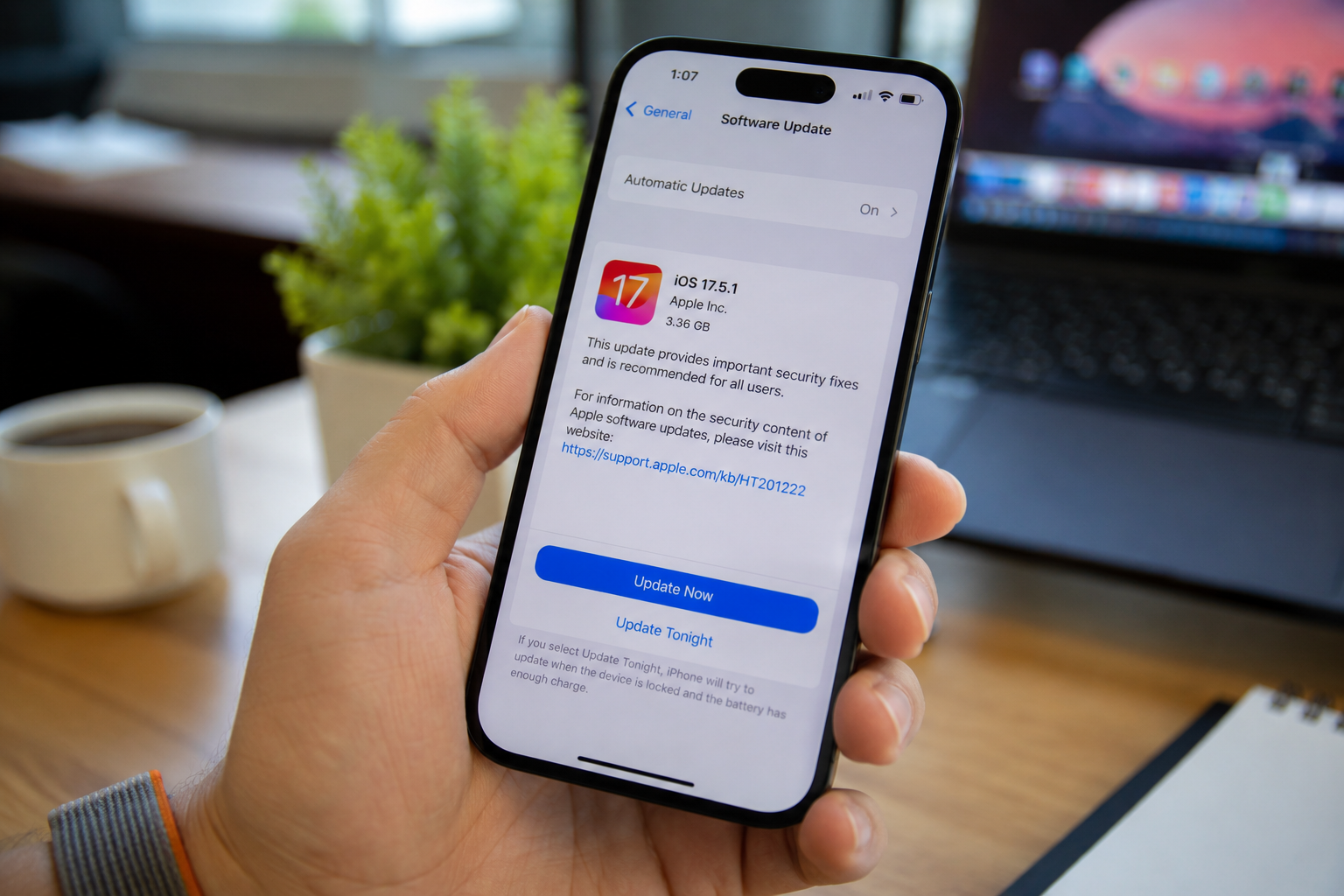
Apple has introduced a faster approach to releasing iOS security updates, reflecting a major shift in how technology companies respond to modern cyber threats. Instead of relying mainly on scheduled software releases, the company is moving toward more frequent security patches as artificial intelligence helps researchers identify software vulnerabilities at an unprecedented speed.
The change signals a broader transformation across the technology industry, where AI is reducing the time between discovering a security flaw and criminals attempting to exploit it. For businesses, security teams, and IT administrators, this means patch management is becoming a continuous process rather than a monthly routine.
AI Is Reshaping Software Security
Artificial intelligence is rapidly changing the vulnerability discovery process. Security researchers can now identify software weaknesses much faster than before, allowing vendors to develop and release security fixes in shorter timeframes.
Apple’s latest update strategy reflects this new reality. Instead of waiting for traditional release schedules, security patches may now arrive whenever important vulnerabilities are discovered, helping reduce the opportunity for attackers to exploit known flaws.
Industry analysts expect other technology companies to continue adopting similar release strategies as AI-driven security research becomes more advanced.
Patch Management Is Becoming More Demanding
While faster updates improve protection, they also create new challenges for IT departments responsible for managing large numbers of devices.
Organizations that rely on Bring Your Own Device (BYOD) policies may face additional complexity because employees often use personal iPhones and iPads to access company systems. If those devices remain unpatched, they could expose sensitive corporate data to unnecessary security risks.
Security leaders are increasingly expected to verify that critical updates are deployed quickly across every managed device instead of waiting for fixed maintenance schedules.
Businesses Need Faster Response Times
Cyber security experts warn that attackers are moving faster than ever before. As AI accelerates vulnerability discovery, organizations have less time to evaluate, test, and deploy security updates before newly discovered flaws become potential attack vectors.
Modern patch management, therefore, requires continuous monitoring, automated deployment where possible, and improved visibility across all endpoints connected to corporate networks.
Failing to install important updates quickly can give attackers more time to exploit security weaknesses.
Remote Work and BYOD Increase Security Risks
The widespread adoption of hybrid working has made endpoint management more difficult for many organizations.
Employees frequently connect to company resources from personal smartphones, tablets, and remote locations that fall outside traditional IT environments. This reduces visibility for security teams and makes it harder to confirm that every device has installed the latest security updates.
Implementing access policies that restrict outdated devices from connecting to business applications can significantly reduce this risk.
Automation Is Becoming Essential
Many cyber security professionals now recommend automated patch deployment wherever practical.
Automated update systems help organizations install important security fixes more consistently while reducing delays caused by manual approval processes. Although testing remains important for business-critical environments, automation can greatly reduce the time attackers have to exploit newly disclosed vulnerabilities.
As software vendors continue releasing updates more frequently, automated patch management is becoming an essential part of modern cyber security operations.
Why Apple’s New Strategy Matters
Apple’s updated release model highlights a much larger industry trend rather than an isolated software change.
As AI continues accelerating both vulnerability discovery and cyber attacks, organizations can no longer rely on predictable monthly patch cycles. Instead, security teams must prepare for continuous software updates, ongoing risk assessments, and faster decision-making.
Businesses that modernize their patch management strategies today will be better positioned to defend against tomorrow’s increasingly automated cyber threats.
Frequently Asked Questions
Why is Apple releasing iOS security updates more frequently?
Apple is adapting to faster vulnerability discovery driven by AI, allowing important security fixes to reach users sooner.
How does this affect businesses?
Organizations need to deploy security updates more quickly, especially when employees use personal mobile devices for work.
What should security teams do?
Security experts recommend continuous patch management, automated updates where appropriate, stronger endpoint visibility, and policies that prevent outdated devices from accessing corporate systems.