



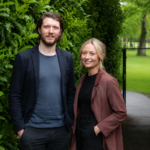







The study of the mind’s hidden potential has fascinated humanity for centuries. Among the researchers who dared to explore these uncharted territories, one name often surfaces in discussions of psychotronics: Jana Zapadlová. This article delves into the Jana Zapadlová psychotronics biography, tracing her journey from her early days to her significant contributions to a field that continues to challenge our understanding of reality. We will explore the life and work of a woman who dedicated her career to investigating the subtle energies that connect consciousness and the physical world.
The Early Years of a Future Pioneer
Born in the heart of Czechoslovakia, Jana Zapadlová’s early life was shaped by an environment rich in intellectual curiosity and cultural heritage. From a young age, she displayed a keen intellect and an insatiable curiosity about the world around her. This wasn’t just a fleeting childhood interest; it was a deep-seated drive to understand the “how” and “why” behind observable phenomena. Her family and teachers noticed her analytical mind and encouraged her academic pursuits.
This foundational period was crucial in developing the mindset that would later define her career. She excelled in scientific subjects, demonstrating a natural aptitude for disciplines that required rigorous logic and systematic investigation. Yet, alongside this scientific inclination, she harbored a profound interest in the less tangible aspects of human experience. Questions about consciousness, intuition, and the nature of thought were never far from her mind. This dual fascination—with both the measurable and the immeasurable—set the stage for her eventual entry into the complex world of psychotronics.
Academic Foundations and a Shift in Focus
Zapadlová pursued higher education with vigor, initially focusing on more conventional scientific fields. Her university studies provided her with a robust framework in physics and biology, grounding her in the empirical methods and theoretical knowledge of mainstream science. This education was instrumental, giving her the tools to approach complex problems with precision and a critical eye. She learned the importance of controlled experiments, data analysis, and peer-reviewed validation—principles that would become vital in her later, more controversial research.
However, during her academic journey, Zapadlová became increasingly aware of the limitations of the conventional scientific model. She felt that it often dismissed phenomena that did not fit neatly into existing paradigms. This dissatisfaction led her to explore alternative avenues of research, where she first encountered the emerging field of psychotronics. The discipline, which sought to study the interaction between consciousness, energy fields, and matter, resonated deeply with her lifelong questions. It offered a potential bridge between the objective world of physics and the subjective realm of the mind. This encounter marked a pivotal moment in her career, steering her away from a traditional scientific path and toward the frontier of human potential.
Entering the World of Psychotronics
The transition into psychotronics was not a simple one. In the mid-20th century, the field was often viewed with skepticism by the mainstream scientific community. Psychotronics, sometimes known as bioenergetics or parapsychology in different contexts, proposed that living organisms generate unique energy fields that can interact with and influence other systems, both living and inanimate. Researchers in this area investigated phenomena like telepathy, clairvoyance, and psychokinesis under a scientific lens.
Jana Zapadlová was undeterred by the controversy. She brought her rigorous scientific training to this new domain, determined to apply systematic methodology to what many considered pseudoscience. She joined a community of like-minded researchers who were working to establish psychotronics as a legitimate field of study. Her early work involved meticulously designed experiments aimed at detecting and measuring the subtle energy fields anecdotally associated with healers, dowsers, and individuals claiming telekinetic abilities. This period was formative for the Jana Zapadlová psychotronics biography, as it was here that she began to build her reputation as a serious and methodical investigator.
Key Contributions and Research Milestones
Throughout her career, Jana Zapadlová made several significant contributions that advanced the study of psychotronics. Her work was characterized by a relentless pursuit of empirical evidence and a desire to create repeatable, verifiable experiments.
Developing New Measurement Techniques
One of Zapadlová’s most important achievements was her work on developing instrumentation capable of detecting subtle biological energies. She understood that for psychotronics to gain credibility, its claims needed to be backed by objective data. She collaborated with engineers and physicists to design and refine devices that could allegedly measure the bio-fields emitted by living organisms. These instruments were often based on principles of electromagnetism, but were calibrated to be sensitive to the extremely faint energy signatures that psychotronics researchers believed were associated with conscious intent and biological processes. Her efforts in this area helped move the field away from purely qualitative observation toward a more quantitative approach.
The Study of Mental Influence on Matter
A central theme in Zapadlová’s research was the concept of psychokinesis, or the mind’s ability to influence physical systems. She conducted numerous experiments exploring this phenomenon. Her studies often involved subjects attempting to influence the output of random number generators (RNGs), the rate of radioactive decay, or the growth of simple organisms like plants or mold. By applying strict controls and statistical analysis, Zapadlová sought to demonstrate that focused human intention could produce small but statistically significant effects on these systems. While controversial, her published papers on these experiments became important reference points within the psychotronics community and sparked considerable debate.
Investigating Energy Healing and Bio-Fields
Zapadlová also dedicated a significant portion of her research to investigating the mechanisms behind energy healing. She worked with individuals known for their healing abilities, attempting to measure changes in their bio-fields during healing sessions. Her research aimed to identify the physical correlates of this purported energy transfer. She explored whether the effects could be explained by thermal, electromagnetic, or other known forms of energy, or if they pointed to a novel type of biological energy. Her methodical approach to studying this ancient practice brought a new level of scientific inquiry to the topic, further solidifying her place in the history of psychotronics.
Legacy and Impact on Modern Research
Jana Zapadlová’s work left an indelible mark on the field of psychotronics. Her insistence on scientific rigor and empirical validation helped lend a degree of credibility to a discipline often dismissed by mainstream science. She demonstrated that it was possible to study seemingly anomalous phenomena with the same tools and critical thinking applied to any other scientific problem. The detailed exploration of her work is a cornerstone of any complete Jana Zapadlová psychotronics biography.
Her legacy lives on in the work of contemporary researchers who continue to explore the frontiers of consciousness. Modern studies in fields like quantum biology, biofield science, and consciousness research owe a debt to the groundwork laid by pioneers like Zapadlová. The questions she asked—about the nature of consciousness, its relationship to the physical world, and the untapped potential of the human mind—are more relevant today than ever. While the scientific community remains divided on many of the conclusions reached by psychotronics researchers, the spirit of open-minded inquiry championed by Jana Zapadlová continues to inspire a new generation of scientists to explore the mysteries that lie at the intersection of mind and matter. Her life and career serve as a testament to the courage it takes to challenge established paradigms and venture into the unknown.