










When the sun sets over the hills of Granada, a transformation takes place at one of Europe’s most famous historic sites. The bright daylight gives way to soft, strategic lighting that casts beautiful shadows across ancient Islamic architecture. Visitors experience a profound sense of quiet and exclusivity as they walk through the grand halls and courtyards. This evening experience does much more than provide a magical memory for travelers. It acts as a powerful financial engine.
Understanding the mechanics behind Alhambra night tour attendance revenue reveals a fascinating model of modern heritage management. Historic sites around the world struggle to fund maintenance without destroying the very monuments they want to protect. The Alhambra solves this problem brilliantly.
This guide breaks down exactly how these evening tours work. We will explore the unique appeal of the night experience, analyze visitor trends, and look at the financial strategies that generate millions of euros. You will also learn how this targeted tourism approach benefits the local economy and sets a standard for cultural preservation.
The Unique Appeal of Exploring the Alhambra at Night
Daytime visits to the Alhambra involve large crowds, bright sunlight, and a bustling atmosphere. Millions of people walk through the gates every year to see the Nasrid Palaces and Generalife Gardens. Night tours offer a completely different dynamic. Visitors enter a calm, highly controlled environment where silence amplifies the beauty of the surroundings.
Carefully designed lighting systems highlight the intricate carvings and stunning water reflections that many people miss during the day. The shadows create a dramatic and romantic atmosphere. This shift in environment appeals strongly to couples, photographers, and history enthusiasts who want a deeper connection with the monument.
People no longer want standard sightseeing tours. They seek emotional, immersive experiences that leave a lasting impression. The night tour delivers this exact value. By removing the daytime rush, the Alhambra creates a premium environment. Visitors feel like VIP guests exploring a private palace. This strong emotional appeal forms the foundation of the entire evening revenue model.
Analyzing Attendance Trends and Seasonal Patterns
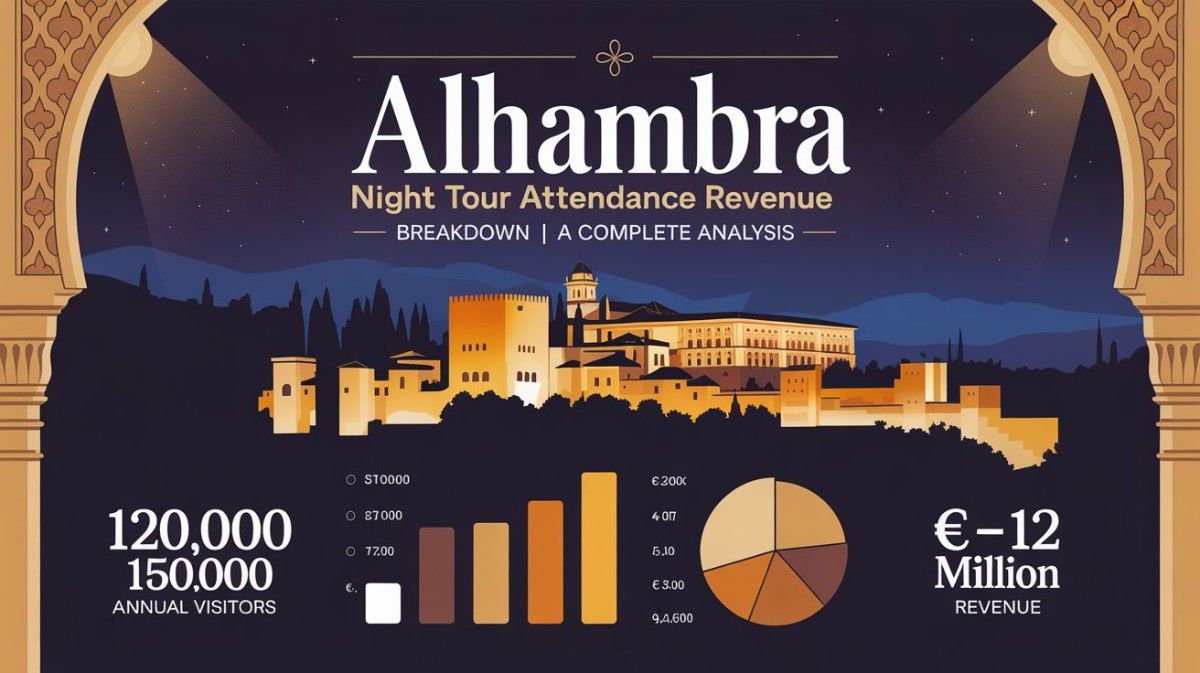
Night tour attendance relies on strict capacity control rather than pushing for maximum volume. Management intentionally limits the number of people who can enter after dark. Annually, night tours attract between 120,000 and 150,000 visitors. This represents only a small fraction of the nearly three million people who visit the site each year.
Visitor numbers fluctuate based on the season. During the peak summer months, warm weather and long days make evening tours incredibly popular. A typical busy summer night might see 400 to 500 visitors walking through the illuminated pathways. Travelers want to escape the intense daytime heat, making the cool evening tours highly desirable.
During the off-season, attendance naturally dips. A winter night might bring in 200 to 300 visitors. However, the demand remains remarkably steady year-round. Because tickets are scarce, they often sell out weeks in advance, regardless of the month. This consistent demand creates a highly predictable flow of visitors, enabling management to plan staffing and resources with great accuracy.
Mechanisms Driving Alhambra Night Tour Attendance Revenue
The financial success of the evening program comes down to simple but effective economics. Alhambra night tour attendance revenue ranges from €8 million to €12 million annually. The site achieves this high income through smart pricing strategies and premium service offerings.
Basic entry tickets for the night tour typically cost between €8 and €13. While this seems affordable, many visitors upgrade their experience. Guided night tours range from €15 to €25. These premium options include expert narration and smaller group sizes, which significantly increase the average revenue per visitor.
Scarcity plays a massive role in this financial model. Because the Alhambra limits the number of available tickets, visitors perceive the tour as a rare opportunity. They willingly pay higher prices for an exclusive experience. This means the night tour generates a much higher profit margin per person than the crowded daytime visits. Management optimizes value over volume, proving that you do not need massive crowds to generate substantial income.
The Ripple Effect on Granada and Local Businesses
The economic benefits of the night tours extend far beyond the palace walls. The city of Granada relies heavily on tourism, and evening activities play a crucial role in the local economy. When tourists book a night tour, they naturally extend their active hours in the city.
Visitors leave their hotels to enjoy dinner before or after their tour. Local restaurants near the Alhambra see a direct boost in reservations and walk-in customers. Taxi drivers and public transportation services benefit from moving hundreds of people to and from the site late into the evening.
Furthermore, the evening tours encourage travelers to book an extra night in a Granada hotel. Instead of taking a day trip and leaving before sunset, tourists stay overnight to ensure they catch their scheduled night slot. This additional overnight stay injects significant money into the local hospitality sector. The night tours serve as an anchor attraction that sustains the broader nighttime economy across the region.
Balancing Tourism Growth with Heritage Preservation
Running a massive tourist attraction requires a delicate balance. Historic structures suffer from wear and tear when too many people walk their halls. The Alhambra faces strict conservation limits set by heritage organizations. Management must protect fragile floors, delicate plasterwork, and ancient water systems.
Night tours actually help solve this preservation challenge. By opening the site in the evening, management spreads the visitor load over a longer period. This reduces the intense pressure that builds up during peak daytime hours. Small, controlled groups cause far less physical strain on the monument than massive daytime crowds.
However, running night operations brings unique challenges. The site requires specialized security and trained guides to keep people safe in low-light conditions. Maintenance crews must work efficiently to clean the pathways. Weather also plays a disruptive role, as heavy rain can force sudden cancellations. Despite these hurdles, the income generated from the evening tours directly funds ongoing restoration projects. The tours pay for the very conservation efforts that keep the palace standing.
The Future Outlook for Night Tours and Revenue Growth
The future of Alhambra’s evening tourism looks incredibly bright. Global travel trends show a massive shift toward specialized, high-quality experiences. As travelers continue to seek out unique adventures, the demand for after-dark heritage tours will only increase.
Since the Alhambra cannot safely increase its visitor capacity, future revenue growth will come from enhanced experiences. Management plans to introduce more premium options. These might include private group access, exclusive photography sessions, and specialized cultural storytelling events. By adding value to the existing time slots, the site can increase revenue without letting a single extra person through the door.
Digital innovations will also smooth the booking process. Advanced ticketing systems allow the site to implement dynamic pricing, adjusting costs based on real-time demand and seasonality. This ensures the monument maximizes its earning potential while maintaining its peaceful atmosphere.
Moving Forward with Heritage Tourism
The Alhambra provides a perfect blueprint for historic sites worldwide. Limiting access can actually increase financial returns while protecting fragile architecture. The evening tours transform a simple walk through an old building into an unforgettable journey through time.
If you plan to visit the region, book your evening tickets well in advance. Consider opting for a guided experience to truly understand the history hidden in the shadows. For heritage managers and tourism professionals, study this model closely. Focus on creating high-value, low-impact experiences that respect the past while funding the future.