









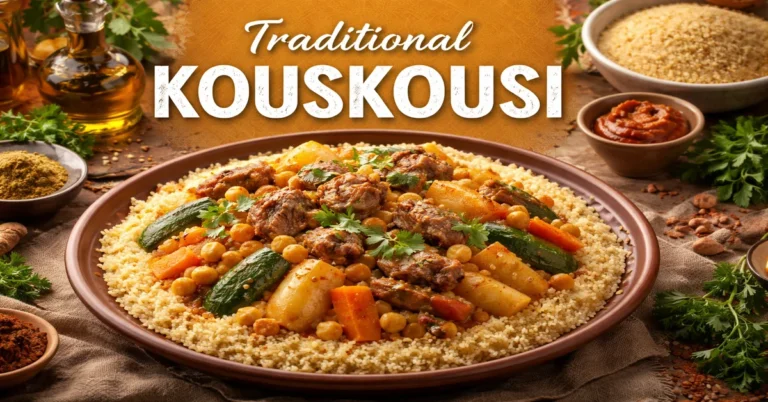
What if there were an ingredient with a rich history, numerous stories to tell, that brings people together, and that can fuse with modern-style cuisine? That ingredient is kouskousi. Even though people might refer to this ingredient by a different name, it has a very distinct history and is a North African staple. This versatile grain is a base for many culinary delights, from stews to salads.
If you want to add to your pantry an ingredient that is nutritious, easy to cook and lets you get creative in the kitchen, then you have found the right ingredient. In this article, we will look at the history, the surprisingly numerous health benefits, and the versatile kouskousi.
What Is Kouskousi?
It may seem like kouskousi is a very small pasta or small grains. Made from crushed durum wheat semolina, this is hand-rolled by cooks into small granules. This creates a very light, fluffy texture and absorbs sauces and spices well.
While it is considered a type of couscous, kouskousi is a food very specific to one region. This food is a beloved staple across the Mediterranean and North Africa, where it can turn very basic ingredients into a lavish, exquisite meal. Regardless of whether you use traditional steaming or newer quick-cooking methods, the grains remain very tender and ultimately very satisfying.
The Historical Roots of a Desert Staple
The story of Kouskousi begins over a thousand years ago. Historians trace its origins to the indigenous Berber communities of North Africa. These early societies needed durable, nutritious food that could withstand the harsh desert environment and sustain large families.
Born from Necessity
Making kouskousi used to take a lot of time but was also extremely rewarding; even now, creating it still demonstrates humanity’s ability to get by even in tough times. Women used to get together to take turns rolling semolina by hand. The tiny pieces we recognize today as couscous were then dried in the sun. These dried grains also allowed families to store food for tough times or even for their long trips while trading along the trade routes.
A Journey Across Borders
As trade across the Mediterranean grew, so did the popularity of this adaptable grain. From Maghreb, merchants brought it to Europe and the Middle Eastern markets. Each culture that came to know kouskousi made it their own by adding local variations and/or new ingredients. At present, such adaptations of the cuisine can be located in Tunisia, Morocco, Libya, and in certain regions of Sicily and Greece.
Cultural Significance: More Than Just Food
In many households, kouskousi represents much more than sustenance. It symbolizes hospitality, unity, and tradition.
The Friday Ritual
Many North African cultures have family gatherings every Friday, during which they serve a large kouskousi dish. The communal meal loosens social ties, as families eat from the same dish. The event promotes and highlights equality and togetherness, as well as the spirit of conversation, connections, and sharing gratitude.
Celebrating Life’s Milestones
Kouskousi is commonly featured at other significant events in a culture, such as weddings, religious holidays, and family birth celebrations, where elaborate versions of the dish are served. To honor their guests, hosts of all these important functions, in addition to kouskousi, serve caramelized onions and raisins, and lamb/chicken garnishes.
The Impressive Health Benefits of Kouskousi
Beyond its cultural value and delicious taste, kouskousi offers compelling nutritional benefits. It serves as an excellent alternative to refined pasta or white rice.
A Source of Plant-Based Protein
If you want more protein but don’t want to eat more meat, kouskousi is a good choice. One cup of kouskousi provides a good amount of protein, which supports tissue repair and muscle growth. If you eat kouskousi with a legume like chickpeas, it becomes a complete protein food.
Rich in Selenium
One of the standout nutrients in this grain is selenium. This essential mineral plays a vital role in thyroid health and supports a robust immune system. It also acts as an antioxidant, helping your body fight off oxidative stress and inflammation.
Digestive Health
Whole-grain varieties of kouskousi are packed with fiber. Fiber aids digestion, prevents constipation, and helps you feel fuller for longer. This satiety factor makes it a helpful ally for anyone managing their weight, as it can curb unnecessary snacking.
Mastering Versatility: How to Cook with Kouskousi
One of the greatest advantages of kouskousi is its adaptability. You can serve it hot or cold, sweet or savory, as a main course or a side dish.
Traditional Steaming
Some people say that the only way to make kouskousi is to steam it in a special pot directly above a pot of stew. This is because the grains get all of the steam filled with meat and veggies, and soak it all in. Sure, it may take some special equipment called a couscoussier, but it is all worth it in the end.
Quick and Easy Preparation
For busy weeknights, the absorption method works wonders. Boil water or broth, pour it over the dried grains, cover, and let it sit for 5 to 10 minutes. Fluff it with a fork, add a knob of butter or a drizzle of olive oil, and you have a perfect side dish ready in moments.
Creative Culinary Uses
- Salads: Toss cooled grains with cucumber, tomatoes, fresh mint, and lemon juice for a refreshing summer salad.
- Breakfast Bowls: Treat it like oatmeal. Serve it warm with milk, honey, cinnamon, and dried fruits for a comforting morning meal.
- Stews and Tagines: Serve it as a bed for slow-cooked meats and root vegetables. The grains soak up the rich gravy, ensuring no flavor is wasted.
- Stuffing: Use it as a filling for roasted peppers, zucchini, or even roast chicken.
Modern Twists on a Traditional Favorite
Kouskousi is being revived by chefs worldwide. It could be combined with grilled octopus, infused with saffron essence, or paired with quinoa in the much-discussed grain bowls. One consequence of the modern diet is to respect traditions but new lives. Whole wheat versions can be found everywhere for extra dietary fibre. For today’s fast home cook, quick cooking time is ideal. Between people’s desire for nutritious, whole foods, this sort of life is a bridge.
Why Kouskousi Belongs in Your Pantry
Kouskousi shows how ancient cultures can help us discover new ways to eat healthily. Most foods can’t pass the health, taste, and historical combo that kouskousi does. It’s perfect whether you’re making a new dish or honoring a recipe from the past.
When going to the store, check the kouskousi for a taste of North African culture instead of buying boring pasta. You will taste how good old traditions can be.