









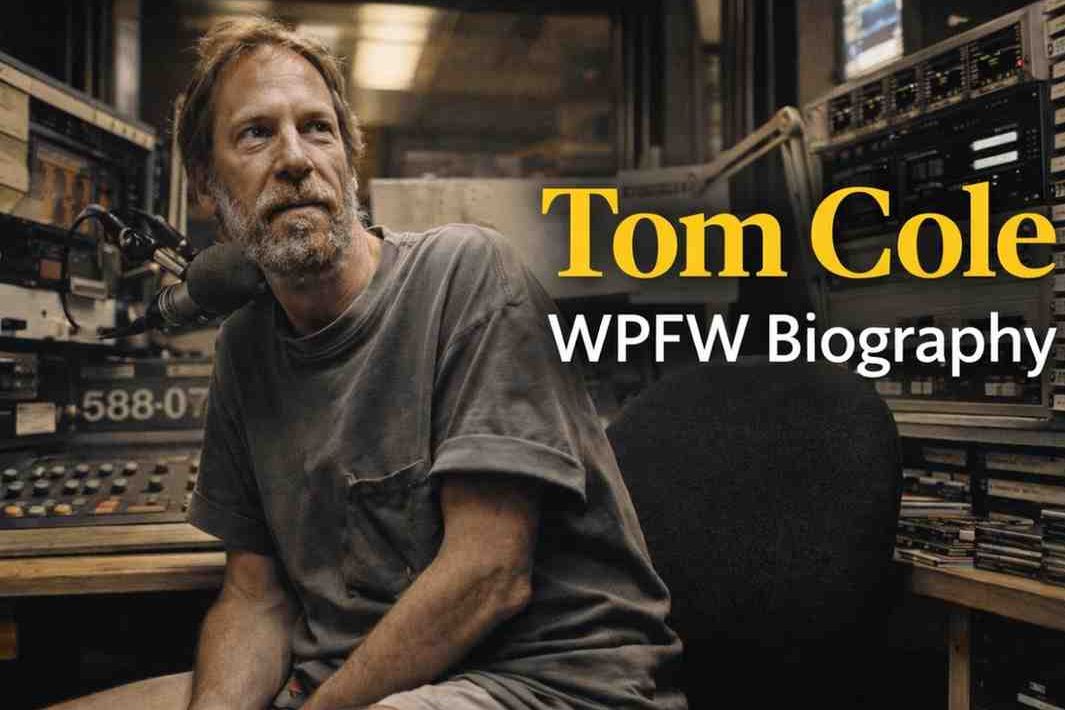
If you have ever tuned into public radio in the Washington, D.C. area, chances are you have heard the distinct, knowledgeable voice of Tom Cole. For decades, he has been a staple of the airwaves, guiding listeners through the intricate worlds of jazz, blues, and cultural history. While many know him as a senior editor at NPR, his deep roots in community radio define much of his legacy. This Tom Cole WPFW biography explores the life of a man who has dedicated his career to the art of listening and the craft of storytelling.
From his early days as a student of music to his current status as a revered broadcaster, Cole’s journey offers a fascinating look at the evolution of public media. He isn’t just a voice behind a microphone; he is a curator of culture who has spent over four decades shaping how we experience music and news.
Early Life and Musical Foundations
Every great broadcaster has an origin story, and the Tom Cole WPFW biography begins with a deep-seated love for sound. Born in Shreveport, Louisiana, on April 28, 1949, Cole didn’t stay in the South for long. By the time he was two years old, his family moved to Moore, Oklahoma, returning to the roots where his parents, Helen Te Ata and John Cole, were raised.
It was here that the foundations of his work ethic were built. His father instilled in him a sense of diligence that would later define his career in the demanding world of daily news and weekly radio production. But it wasn’t just hard work that shaped him; it was music.
Cole is a native of Washington, D.C., in spirit and professional tenure, but his educational background took him across the map. He didn’t just listen to music; he studied it intensely. He pursued classical guitar at the American University and took private lessons to master the instrument. This technical knowledge of music theory and performance would later set him apart as a host. When Tom Cole talks about a guitar riff or a musical composition, he speaks from the perspective of a player, not just an observer.
His academic pursuits also included comparative literature at Catholic University in D.C. and Grinnell College in Iowa. This blend of literary study and musical training created a unique skill set. He could analyze a narrative just as well as he could deconstruct a melody, a dual talent that would become the hallmark of his broadcasting career.
The WPFW Connection: A Legacy Since 1977
The most defining chapter of the Tom Cole WPFW biography for local listeners began in 1977. This was the year he started hosting and producing a weekly three-hour program on WPFW-FM in Washington, D.C.
WPFW is not your average radio station. As a Pacifica station, it has a mission to provide outlets for artists and communities often ignored by the mainstream. Cole fit this mission perfectly. His show wasn’t a rigid playlist of top hits; it was an exploration. For over 40 years, he has used this platform to interview musicians, play eclectic mixes, and educate his audience.
Building a Community on Air
What makes Cole’s tenure at WPFW so remarkable is his consistency. In an industry where hosts jump from station to station, Cole planted roots. He built a relationship with his audience that spans generations. Listeners know that when they tune in, they will hear something unexpected.
His program features a mix of music and interviews that reflect the rich cultural tapestry of Washington, D.C. He treats his three-hour slot as a curated experience, weaving together different genres and stories. This long-standing commitment to community radio highlights a crucial aspect of his character: he values the intimate, direct connection with listeners that only local radio can provide.
While his national work reaches millions, his work at WPFW feels personal. It is here that he enjoys the freedom to play deep cuts, explore niche genres, and engage in long-form conversations with artists who might not get airtime elsewhere.
Rising Through the Ranks: The NPR Years
While his heart beats in rhythm with WPFW, his professional career flourished at NPR. The Tom Cole WPFW biography is incomplete without detailing his massive contributions to national public radio.
His journey at NPR began in April 1979 at member station WAMU-FM in Washington, D.C. Here, he wore many hats. He served as the production manager, overseeing the daily operation of studios—a technical role that gave him a deep respect for the engineering side of radio. He also worked as a reporter, writing and producing music features that aired both locally and nationally.
From Associate Producer to Senior Editor
Cole’s expertise quickly propelled him up the ladder. He spent three and a half years as an associate producer for Performance Today, NPR’s daily classical music program. He also worked on Morning Edition, where he coordinated and edited arts and culture stories.
In February 1990, he took on the role that many know him for today: Senior Editor on NPR’s Arts Desk. In this capacity, Cole shapes the cultural coverage for some of the most-listened-to news programs in America, including Morning Edition, Weekend Edition, and All Things Considered.
As a senior editor, he doesn’t just report the news; he decides what matters. He develops stories about film, theatre, fine art, and music. He helps reporters find the emotional core of a story. If you have ever been moved by a segment on NPR about a dying jazz legend or a rising theatre star, there is a good chance Tom Cole had a hand in crafting it.
Significant Projects and Awards
A closer look at the Tom Cole WPFW biography reveals a trophy case of prestigious accolades. His work goes beyond the daily grind of news cycles; he has contributed to documentaries and series that preserve American cultural history.
One of his crowning achievements is the Peabody Award-winning NPR documentary, “I Must Keep Fightin’: The Art of Paul Robeson.” Cole co-edited this project, helping to bring the story of the legendary singer and activist to life with nuance and depth.
He also played a pivotal role in “The NPR 100,” another Peabody Award-winning series. This ambitious project sought to identify the top 100 songs of the 20th century. As an advisor, contributor, and co-editor, Cole helped curate a list that defined the American musical century. This required an encyclopedic knowledge of music history, something Cole possesses in spades.
Voice of America
Between his stints at WAMU and his senior role at NPR, Cole expanded his horizons internationally. From October 1985 to November 1986, he worked as a producer for Voice of America (VOA) Europe. This experience gave him a global perspective on broadcasting, teaching him how to craft stories that resonate across cultural and national boundaries.
The Musician Behind the Mic
It is impossible to fully appreciate the Tom Cole WPFW biography without acknowledging his life as a musician. He isn’t just a critic; he is a practitioner. His background in classical guitar informs every interview he conducts.
When Cole interviews a musician, he asks questions that only a fellow player would think to ask. He understands the discipline required to master an instrument, the anxiety of performance, and the technical intricacies of composition. This earns him the respect of the artists he interviews. They open up to him because they know he speaks their language.
He has studied privately and at the university level, showing a dedication to the craft that mirrors his dedication to journalism. This dual identity—journalist and musician—makes his reporting uniquely empathetic and technically accurate.
Personal Life and Legacy
Despite his public persona, Tom Cole keeps his private life relatively guarded. He is married to Ellen Cole, and they share a child. He balances the high-pressure environment of a national newsroom with the creative freedom of his weekly WPFW show and his family life.
His net worth, estimated by some sources to be around $935,000, reflects a successful and steady career in an industry that can be notoriously unstable. However, his true wealth lies in his influence. He has mentored countless younger producers and reporters, shaping the next generation of audio storytellers.
Why Tom Cole Matters to Public Radio
In an era of algorithm-driven playlists and 15-second soundbites, Tom Cole represents something enduring. He champions the “slow media” approach. He believes in giving a piece of music the time it deserves to be heard. He believes in giving an interviewee the space to pause and think before answering.
The Tom Cole WPFW biography is a testament to the power of consistency. By showing up week after week, year after year, he has become a trusted companion to thousands of listeners. He bridges the gap between the high-brow world of classical arts and the gritty, soulful reality of local jazz and blues scenes.
Key Takeaways from His Career
- Longevity is key: Cole has been on WPFW since 1977 and in his current NPR role since 1990.
- Versatility matters: He moved from technical production management to on-air hosting to senior editorial work seamlessly.
- Passion drives quality: His love for playing the guitar directly enhances his ability to report on music.
- Community first: Despite national success, he maintained his local show on WPFW, staying connected to his roots.
Conclusion
Tom Cole is more than just a biography on a page; he is a living archive of American culture. His work connects the dots between a local radio station in Washington, D.C., and the national stage of NPR. Whether he is editing a breaking news story about the arts or spinning a rare vinyl record on a Sunday afternoon, he brings the same level of care and expertise to the table.
For those researching the Tom Cole WPFW biography, the narrative is clear: this is a man who listened carefully so that we could hear better. His legacy is etched in the airwaves, preserved in the archives of NPR, and alive in the memories of WPFW listeners who have spent decades tuning in to hear what Tom Cole has to say.