










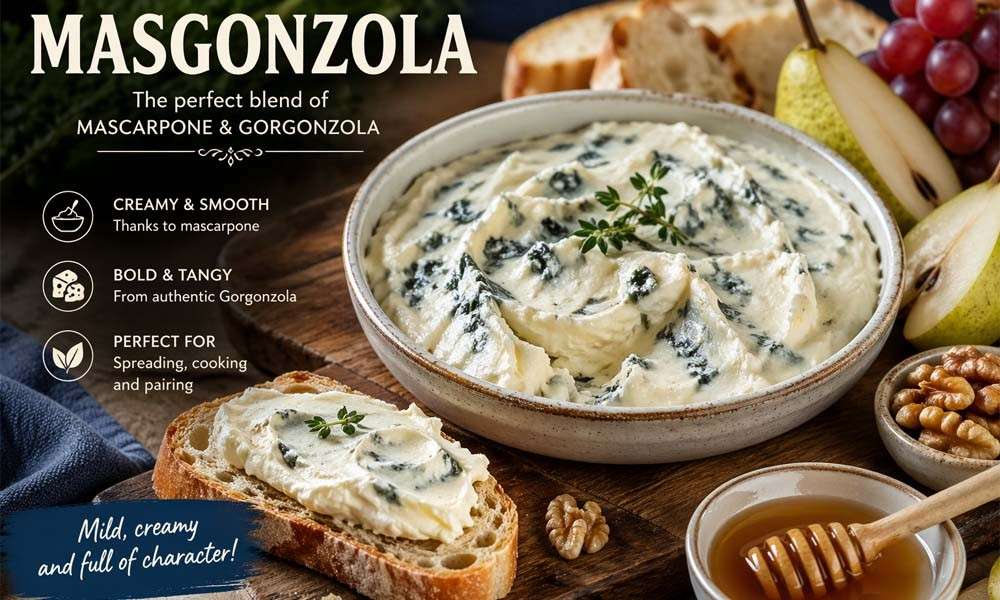
Do you love cheese? What are you more of a fan of? A rich, classy cheese, or a sharper taste with a bit of a cheese kick? I bet you’re standing at the cheese counter having a crisis trying to decide if you want to buy some sandwich cheese or if you want to buy some cheese that will be a perfect complement to that casserole you made. Lucky for you, Italian cheese makers ended that conflict years ago, and they called it Mascarpone!
Masgonzola is brilliant for that reason. It is made of that sweet, sweet butter cheese (Mascarpone), and the super stinky and sharp cousin of the butter cheese (Gorgonzola). It cooks a meal that’s so out of the ordinary, and normally pleb, to a meal so super simple, and so fancy. It doesn’t matter if it’s Saturday night and you’re having your 15th dinner party of the week, or 3 AM and you’re a bit out of it and nervous snack attack, masgonzola will be a perfect add-on to your fridge.
Let Masgonzola work its magic. In the guide, Masgonzola will show you its many tricks.
What Exactly is Masgonzola?
Gorgonzola literally means Gorgonzola cheese with Mascarpone cheese. Mascarpone is sweeter, creamier, and softer than Gorgonzola, which is firmer and not sweet, with a strong flavor. Cheesemakers pull from both to create Mascarpone.
Some mixes of cheese create a consistent creamy cheese in the mix. What is preferable is for the cheese makers to put a slice of the Gorgonzola and a slice of the Mascarpone and stack them to create a cheese torta. When cutting vertical to the layers, cheese eaters would encounter creamy cheese, which would be a soft negative space of a layered pattern, and Gorgonzola.
Mascarpone is ideal for cheese eaters of all ranges, because the Mascarpone softens the blow of the Gorgonzola and makes transitioning to harder and stronger Gorgonzola a much easier process. The spread is simultaneously creamy and strong.
The Unique Features of Masgonzola
To truly appreciate this culinary masterpiece, we need to look at the specific features that set it apart from other dairy products. The magic lies in the contrast.
A Masterclass in Texture
Blue cheeses are often hard to spread. Oftentimes, when you try to smear them on a piece of toasted baguette, they break off, making a mess. Masgonzola has found a solution to this problem.
Masgonzola stays soft and spreadable, even when taken straight out of the fridge, due to the large portion of Mascarpone in the blend. The texture is similar to that of butter. For this reason, Masgonzola is best paired with warm, crusty bread. When you do so, the bread soaks up the Mascarpone spread, which melts and takes on a smooth texture in the bread, and along with the plush texture of the spread, the cheese creates tiny, and of course, flavorful pockets.
Striking Visual Appeal
You see it before you eat it, and the Mascarpone really shines on the platter. If you buy the layered torta varieties, it looks like a savory cake. The fully white Mascarpone looks fierce against the blue and green gorgonzola veins.
Adding a wedge of this to a wooden cutting board with some fresh fruit and artisanal crackers makes everything else on the board irrelevant. It makes eye contact that engages people to cut into its colorful layers and really makes your platter a masterpiece.
Key Benefits for Cheese Lovers and Home Cooks
Adding Mascarpone to your regular grocery rotation brings multiple benefits to your kitchen. It solves common entertaining problems and elevates your everyday cooking routines.
The Ultimate Gateway Blue Cheese
Some people dislike blue cheese because they think it tastes too strong or smells too bad. People who dislike blue cheese may dislike a fancy cheese board. They may even dislike it when hosting larger gatherings where multiple cheese boards can be prepared. You want to accommodate the majority, so that may be when you consider serving a cheese board that may lack blue cheese.
Mascarpone may be best considered as a blue cheese for beginners. There is a good amount of Mascarpone combined with Gorgonzola that serves to soften some of the more aggressive umami characteristics prevalent in most Gorgonzola. It also offers some moderate acidity that helps to keep the cheese board interesting. You may be surprised. Even those who think they dislike blue cheese may be found to come back for more.
Unmatched Culinary Versatility
Standard blue cheese may work in salads, but they have some natural limitations due to its crumbly nature. By comparison, Masgonzola is much more versatile.
It has a high cream content and can melt like a dream. Toss a spoonful in a pan for an instantly fancy sauce for steak or pasta. Slide a dollop of Mascarpone into a sandwich or pipe some into a fresh fig. You get the softened function of cream cheese, but you are working with an aged European cheese.
How to Serve and Enjoy Mascarpone
You can enjoy this cheese straight from the fridge with a simple water cracker, but a little preparation unlocks its full potential. Here are some of the best ways to incorporate it into your meals.
Crafting the Perfect Cheese Board
When creating a charcuterie or cheese board, put blended Mascarpone in a small ramekin or serve it as a standalone wedge if it features layers. Use a small spreading knife instead of a cheese wire.
Serve it with sweet foods to accentuate the cheese’s rich, salty taste. Light fresh figs or some figs, a slice of crisp pear, or a bite of green apple will counterbalance the rich cheese. Right before serving, drizzle a quality, local honey right on the cheese. The honey’s sweetness will counterbalance the bite of the Gorgonzola perfectly. For added crunch, place some candied walnuts or toasted pecans around the wedge as well.
Elevating Warm Dishes
This cheese is great with a little heat. A nice weekday meal is to poach some fresh gnocchi or rigatoni. Keep some of the starchy water. Put the pasta in a pan along with a scoop of Mascarpone and some of the water. The cheese will melt into a nice, thick sauce—a step above your standard mac and cheese.
This is also a great finish to high-end proteins. If you’re gonna grill a nice ribeye or filet mignon, take the meat off the grill and put some mascarpone on top. The cheese will melt and run off the sides.
Best Wine and Beverage Pairings
The correct beverage choice changes both the drink and the cheese for the best. The drink and cheese need to complement each other, but still have bold and thick flavors.
A great choice for a drink to pair with Mascarpone and dessert scheme is a dessert wine. Port and sweet, enticing wines like Moscato d’Asti are both great choices. The high sugar concentration of dessert wines and the sweet, bubbly Moscato reduce and eventually subdue the bite of the Mascarpone while breaking up the Mascarpone’s heavy, oily texture on your tongue.
Choose the Zinfandel or an Italian Barbera for a fruit-based red wine with mellower tannins. The overall effect is a smooth, bold, and dark, sweet wine perfectly contoured to your burning masgonzola. For beer drinkers, a sweet stout or a dark, malty beer called a porter both contrast with the Mascarpone, which is salty and thick.
Storing Your Mascarpone for Maximum Freshness
Due to its moisture and creaminess, Mascarpone needs extra care when being stored to keep its best flavor and texture. It can spoil a lot faster than hard cheeses, like Parmesan and Cheddar, for example. Mozzarella should always be kept in the coldest part of the fridge, which would be the very back of the bottom shelf.
You should avoid keeping it in the door as it will be jumping around in temperature every time you open the fridge. Once you open the cheese, you should wrap it in wax or cheese paper and be sure to store it in a cheese vault or a plastic bag that won’t be 100% closed. Cheese is best to eat withing 5-7 days of opening and should never be frozen. The freezing process will screw up the emulsion and will result in a nasty, watery, grainy thing.
Bring Exceptional Flavor to Your Table
Now, something is here that is a game-changer in the spreadable dairy versus gourmet cheese debate. It’s creamy, it has flavor, and it is called Mascarpone. It’s designed to help those who like plain creamy dairy spreads love this cheese for its tang and embrace buttery flavors.
Look for this heavenly blend at your local butcher or specialty grocery. For a delightful product, pair this with sweet honey to really appreciate what this product brings to your meal!